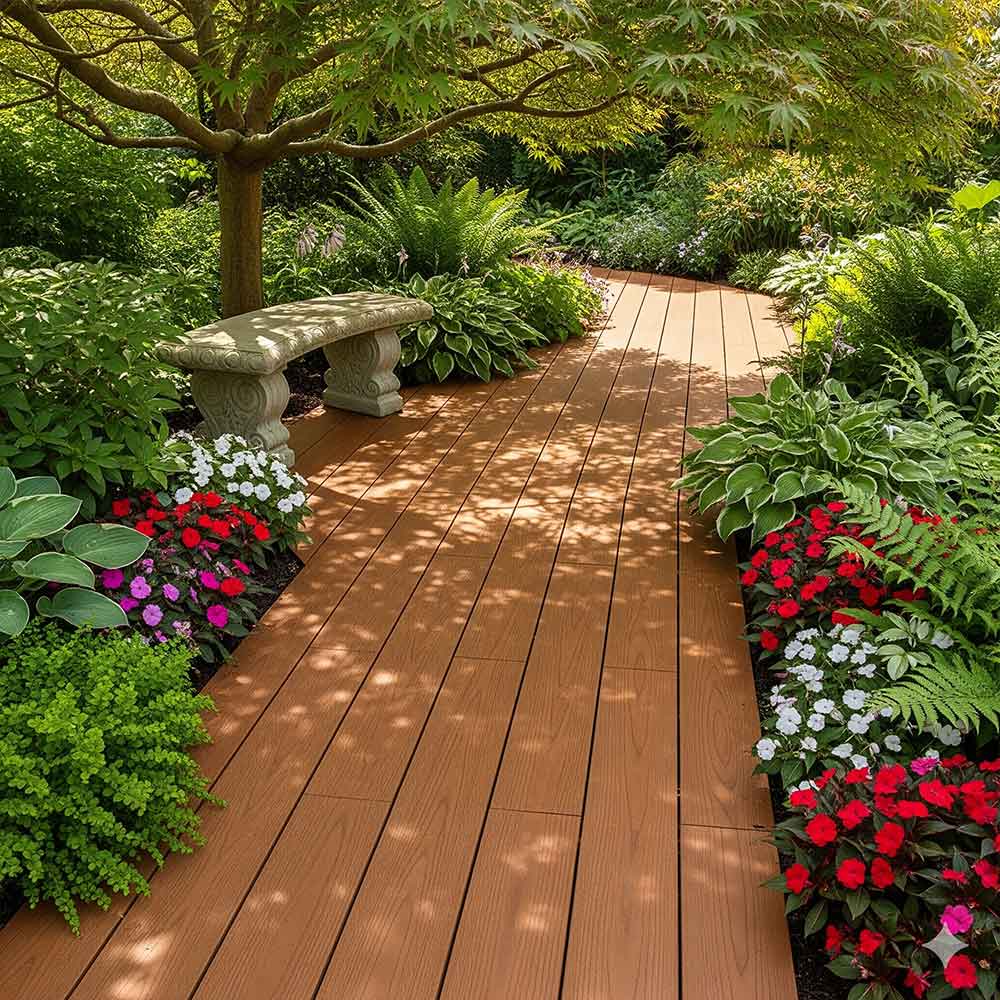
WPC decking is an environmentally friendly wood alternative that combines the properties of plastic and wood fibers. More and more people are choosing WPC sheets to replace traditional wood. Composite materials can be used to make decks, fences, or wall panels and railings. Your ideal deck design can involve many aspects. Before considering using WPC decking, this article will help you understand the advantages and disadvantages of composite decking to help you choose the most suitable material.
Advantages of Wood-Plastic Composite Materials:
Durability: WPC boards can be used outdoors for extended periods, withstanding various climatic conditions and boasting a long service life. Durable and resistant to damage, the WPC substrate interweaves wood fibers into a complex network, allowing various internal stresses of the wood to adapt to each other between the layers. This ensures the flatness and stability of the wood flooring while retaining the aesthetic appeal of solid wood flooring. You can enjoy the warmth of nature while solving the hard maintenance issues associated with solid wood flooring.
Prevents Splitting and Rotting: Traditional wood is prone to mold and rot after absorbing water, potentially posing safety hazards during use. WPC decking prevents rotting and warping caused by moisture.
Reduced Maintenance: WPC decking is easy to clean and maintain. No painting or sanding is required; only occasional washing with water and soap is needed, significantly reducing cleaning and maintenance time. One of the advantages of composite decking is its ease of maintenance. For many busy homeowners, it always looks brand new and is easy to clean. Chinese WPC decking has a well-painted surface, good wear resistance, and requires minimal maintenance. It is said that high-quality wood-plastic composite (WPC) decking can maintain its new-painted shine for up to three years without waxing. This contrasts sharply with the maintenance required for solid wood flooring.
A variety of colors are available. We offer eight standard colors and can also provide custom colors to meet your design requirements.
Environmentally friendly materials. WPC decking is made from recycled plastic pellets and wood fibers, making it an ideal choice for environmentally friendly materials.
Easy installation: WPC decking installation only requires concealed fasteners and screws, and can be done by one person. The simple installation requirements greatly reduce potential installation hazards.
Wood-plastic composite (WPC) outdoor materials also have some drawbacks, as follows:
Higher initial cost. While the initial purchase cost of WPC decking is higher than that of wood, it saves on later maintenance costs, making the overall cost relatively low over the long term.
Artificial material. WPC decking is not 100% solid wood. It is a composite of wood fibers and plastic, but still has a realistic wood grain effect.
Not completely maintenance-free. WPC decking still requires regular removal of leaves and other debris and washing with soapy water.
Heavier than wood. Compared to wood, composite materials of the same size are significantly heavier. We also offer hollow composite decking, which is lighter than solid decking.