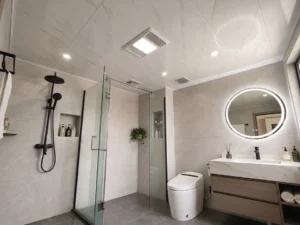

For buyers of PVC wood ceiling panels, a successful bulk order starts with a sample that identifies both the decorative appearance and the supplied product. A photograph may help narrow the choice, but it does not establish the surface process, assembled joint appearance or acceptance criteria for later production.
Distributors need a repeatable reference for their stock range. Project buyers need an approved finish that can be checked at delivery. Both benefit from a written sample record linking the chosen pattern to a model, profile and order specification.

Identify the Finish and Profile
Distinguish pattern from surface process
Wood look describes an appearance. It does not identify the decorative process or mean that the panel contains a natural wood facing. Ask the supplier to state the panel construction and surface treatment separately from the pattern name.
A product range may use terms such as lamination, heat transfer or printing. These labels should be confirmed for the exact model being quoted. Do not assume that a process offered elsewhere in the supplier’s catalog is available on every profile or color.
| Information | What to put in the approval record |
|---|---|
| Panel identity | Model code, profile drawing and dimensions |
| Pattern | Supplier design code and reference sample |
| Surface process | Confirmed process for this model |
| Appearance | Agreed tone, gloss, texture and pattern direction |
| Intended application | Project conditions and required supporting documents |
| Commercial scope | Quantity by design and approved packing requirements |
If a quotation describes laminated panels, request specifications for your selected series and ask the supplier to connect that description to the sample. A finish name alone is insufficient to identify what will arrive.
Review performance statements separately. Scratch resistance, cleaning compatibility or service life should be supported by information applicable to the selected finish. An attractive sample does not establish those properties, and the approval record should not imply that it does.
Inspect the joint appearance
Review several connected panels, not just a small loose offcut. The joint can change the visual rhythm of the ceiling through grooves, shadow lines or the meeting of decorative patterns. Ask whether the approved pattern has a preferred laying direction.
For a hotel corridor, for example, inspect the assembly from the normal viewing position under the intended lighting. A joint that is unobtrusive on a desk may look more pronounced across a ceiling. Include the proposed perimeter trim in the trial when its color or finish affects the overall result.
Record whether the project expects continuous grain alignment or simply a consistent wood-inspired appearance. Do not promise natural timber-like variation or seamless pattern continuity unless the supplier has demonstrated and agreed it for the selected product.
Approve a Physical Sample
Compare under agreed lighting
Use a consistent comparison arrangement. Place the proposed sample and reference together, keep their orientation consistent and identify the light source. If the project has already selected its lighting, review a representative assembly under those conditions where practical.
Daylight, showroom lighting and installed lighting can produce different impressions. The purpose of an agreed review arrangement is to make later comparisons interpretable. It does not establish a universal color tolerance or a laboratory test method.
Photographs remain useful for communicating the selection and recording visible details. Use consistent exposure and avoid filters that alter color. Keep the physical reference available because screens, camera settings and image processing can change the apparent tone.
When narrowing the initial choice, browse finishes for your project and shortlist identifiable designs. Ask for physical samples of the shortlisted models before approving a mixed-design order.
If different people approve appearance and technical suitability, obtain both decisions. A designer’s acceptance of tone should not be interpreted as an engineer’s acceptance of an installation detail or a buyer’s agreement to a substituted specification.
Record sample and batch identifiers
Give each approved sample a unique reference. Record who approved it, when it was reviewed and what the approval covers. If the sample belongs to an earlier production batch, distinguish that fact from a sample prepared for the new order.
| Sample record field | Suggested entry |
|---|---|
| Approval reference | Unique buyer or project reference |
| Supplier identification | Company and model code |
| Decorative design | Pattern code and finish description |
| Physical sample | Label and retained location |
| Assembly reference | Photograph or trial-layout reference |
| Review conditions | Lighting, orientation and viewing arrangement |
| Approval scope | Appearance only, or other specifically documented matters |
| Outstanding items | Question, responsible person and required resolution |
Keep the record with the RFQ and purchase order. If the supplier proposes a change after approval, request a revised sample or documented comparison. Approval of one combination should not silently extend to a different profile or surface process.
Where the order contains several wood tones, use separate approval lines. A general statement such as “all wood colors approved” makes it difficult to resolve a later disagreement about which reference applies to a particular pack.
Manage Repeat Orders
Set visual acceptance criteria
Agree what will be reviewed when production or deliveries are compared with the reference. The criteria may include tone, gloss, pattern direction, visible surface defects and joint appearance. Define the comparison arrangement and the procedure for reporting a discrepancy.
Avoid unsupported promises such as zero color deviation. If the project requires an instrumental color assessment, the parties need an agreed method, measurement conditions and acceptance limit. Do not invent a numerical limit from a general product description.
For distribution stock, consider how customers will combine packs. Ask the supplier to identify production batches and discuss whether material for one visible ceiling area should be supplied together. Do not assume that different deliveries will be visually interchangeable without comparison.
Inspect incoming goods before allocating them to a project. Check model and design labels against the purchase order, and compare representative material with the retained reference. Keep any questioned material identifiable while the buyer and supplier review it.
The purchasing team should also distinguish visual approval from quantity acceptance. A matching appearance does not verify pack count, dimensions or delivery completeness. Record those checks separately so an unresolved packing issue is not hidden by a signed finish sample.
Retain reference samples
Keep a labeled buyer reference and agree how the supplier will retain its corresponding reference. Protect the samples from conditions that could alter their appearance, and record their storage location so a future purchaser can find them.
For a repeat order, send the previous approval reference and ask whether the model, surface process and design code remain current. Review any proposed change before accepting the quotation. A familiar commercial name is not evidence that the construction and finish have remained identical.
Where maintenance replacements are important, discuss agreed spare material as part of the original order. Record its batch and intended use. This is more reliable than assuming an exact visual match can always be purchased years later.
FAQ
Does a wood-grain pattern mean the panel is real wood?
No. A wood-look description identifies the appearance, not the material composition. Request the model’s construction and decorative process so the purchase record describes the actual product.
Can a photograph replace physical sample approval?
A photograph can support selection and communication, but it may change apparent color and gloss. Use a physical reference and an agreed viewing arrangement when appearance is important to the order.
How should samples and batches be recorded?
Label the sample with a unique approval reference, model and design code, review date and approval scope. Keep delivered batch information with the receiving record so material can be traced to the relevant order.
How can repeat orders reduce appearance mismatches?
Retain reference samples, identify the earlier order and request confirmation of any product changes. Compare new material before installation and agree a discrepancy process. Do not rely on the pattern name alone.
Conclusion
A useful finish approval connects the physical sample, assembled appearance and written order specification. It gives buyers and suppliers a common reference for production review, incoming inspection and repeat purchases.
Arrange your finish review
To request finish samples, send LIANTU your preferred design codes, panel profile, quantities, destination and intended application. Include the project's lighting and appearance requirements so the sample review can address the actual purchasing decision.